

Irrigation & Sprinkler Repair in McHenry, IL
Sprinkler Repairs, Fall Blowouts, Spring Start-Ups & New Systems
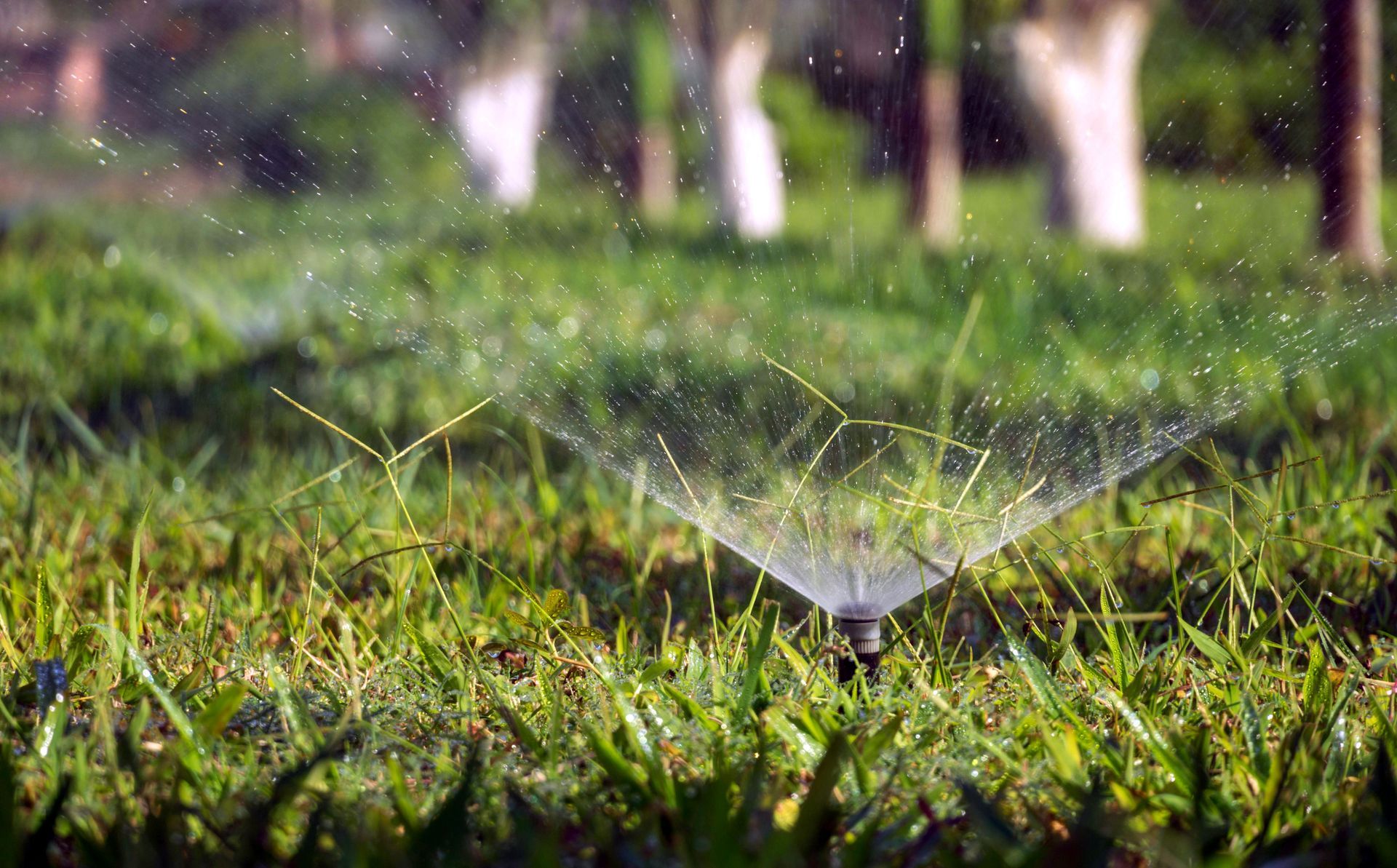
Landscaping Pros McHenry repairs, winterizes and installs lawn sprinkler systems for homes and businesses in McHenry, IL and nearby. Most calls are for sprinkler repair: a head that won't pop up, a zone that stays dry, a valve that keeps running or a wet patch over a buried line. We also blow systems out before the first freeze, start them up again in spring, and put in new systems and extra zones. We're licensed and insured, and the lawn is left tidy when we finish.

Contact Us
Sprinkler and Irrigation Services
- Sprinkler head repairs: broken, sunken, clogged or misaligned heads and nozzles replaced or reset
- Valves and wiring: zones that won't start or won't shut off traced to the valve, solenoid or wire
- Leaks and broken lines: cracked pipe and fittings located and repaired, with the turf put back
- Controllers and rain sensors: timers reprogrammed or replaced, and rain shut-off added
- Fall blowouts: every zone cleared with compressed air before the first freeze
- Spring start-ups: lines refilled slowly and each zone run and checked for winter damage
- New systems and added zones: layouts planned around your lawn, beds and water pressure
Common Sprinkler Repairs
Most sprinkler problems come down to a handful of parts, and the symptom usually points to which one.
Heads that won't pop up, or won't go back down. A head that stays in the ground is usually blocked by debris in its stem, obstructed by grass or soil, short of pressure, or sitting on a broken riser. One that stays up after the zone shuts off tends to have debris in the body or a worn riser seal. We clean out or replace the head and reset it level with the lawn.
A zone that won't turn on. Each zone has its own valve, opened by a low-voltage signal from the controller. When a zone won't start, the usual causes are a corroded wire connection, a damaged wire underground, a faulty solenoid on the valve or a controller setting. We test the circuit with a meter at the controller before anything gets dug up.
A valve that won't shut off. A zone that keeps running generally has debris stuck in the valve's diaphragm, a diaphragm that has worn out or a failed solenoid. The valve is opened up, cleaned and rebuilt, or replaced if it's past that.
Low pressure and dry corners. Weak spray and dry spots usually mean low pressure. Common causes include a partly closed valve, a failing pressure regulator, too many heads on the zone or a leaking pipe, which can show as a soggy spot in the lawn. Leaks waste a lot of water too: the EPA estimates that a hole 1/32 of an inch across, about the thickness of a dime, can waste around 6,300 gallons a month.
Clogged nozzles. Debris in the lines and mineral buildup both block nozzles and their screens. Iron is common in this county's groundwater: U.S. Geological Survey sampling in 2020 found it above the aesthetic benchmark in 39 of 45 monitoring wells. If your system runs off a well, we check the nozzle screens at start-up.
Controllers, Rain Sensors and Smart Upgrades
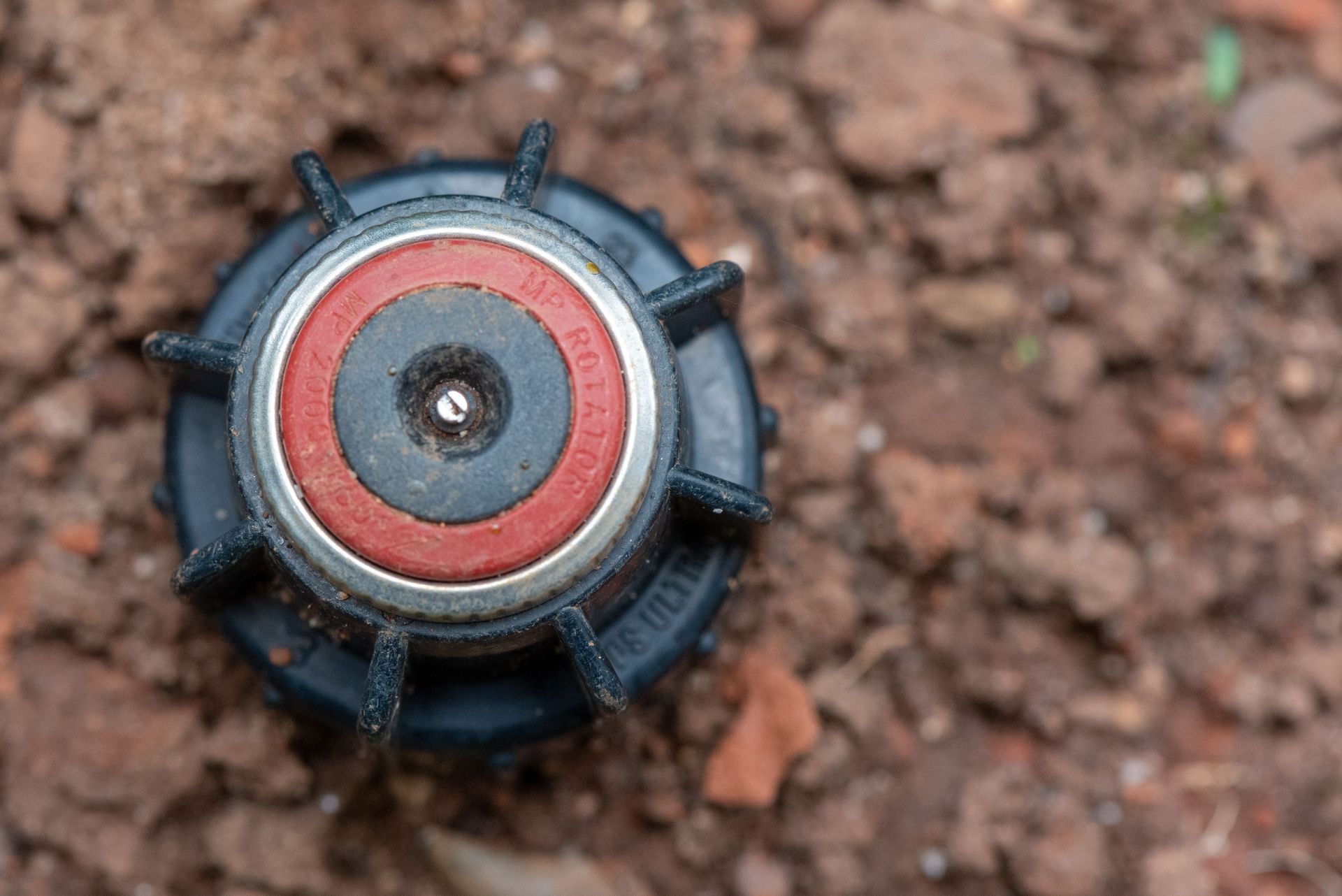
The controller is the timer that tells each valve when to open. A repair visit is a good moment to look at how it's set, because a schedule left on its midsummer setting runs the same way through a wet May or a cool September. McHenry County's water resources division notes that a lawn needs half as much water in spring and fall as it does in July or August.
Illinois has required rain shut-off on new systems for years: every automatically operated lawn sprinkler system installed after January 1, 2009 must have technology that stops it from running during periods of sufficient moisture or rainfall. A system older than that may have no sensor at all.
A weather-based controller goes further and adjusts the schedule to local weather. The EPA says replacing a clock-based controller with a WaterSense labeled one can save an average home up to 15,000 gallons of water a year. It also estimates that a household whose automatic system isn't properly maintained and operated can waste up to 25,000 gallons annually, which is why we check the heads and the schedule on the same visit.
Sprinkler Winterization and Fall Blowouts
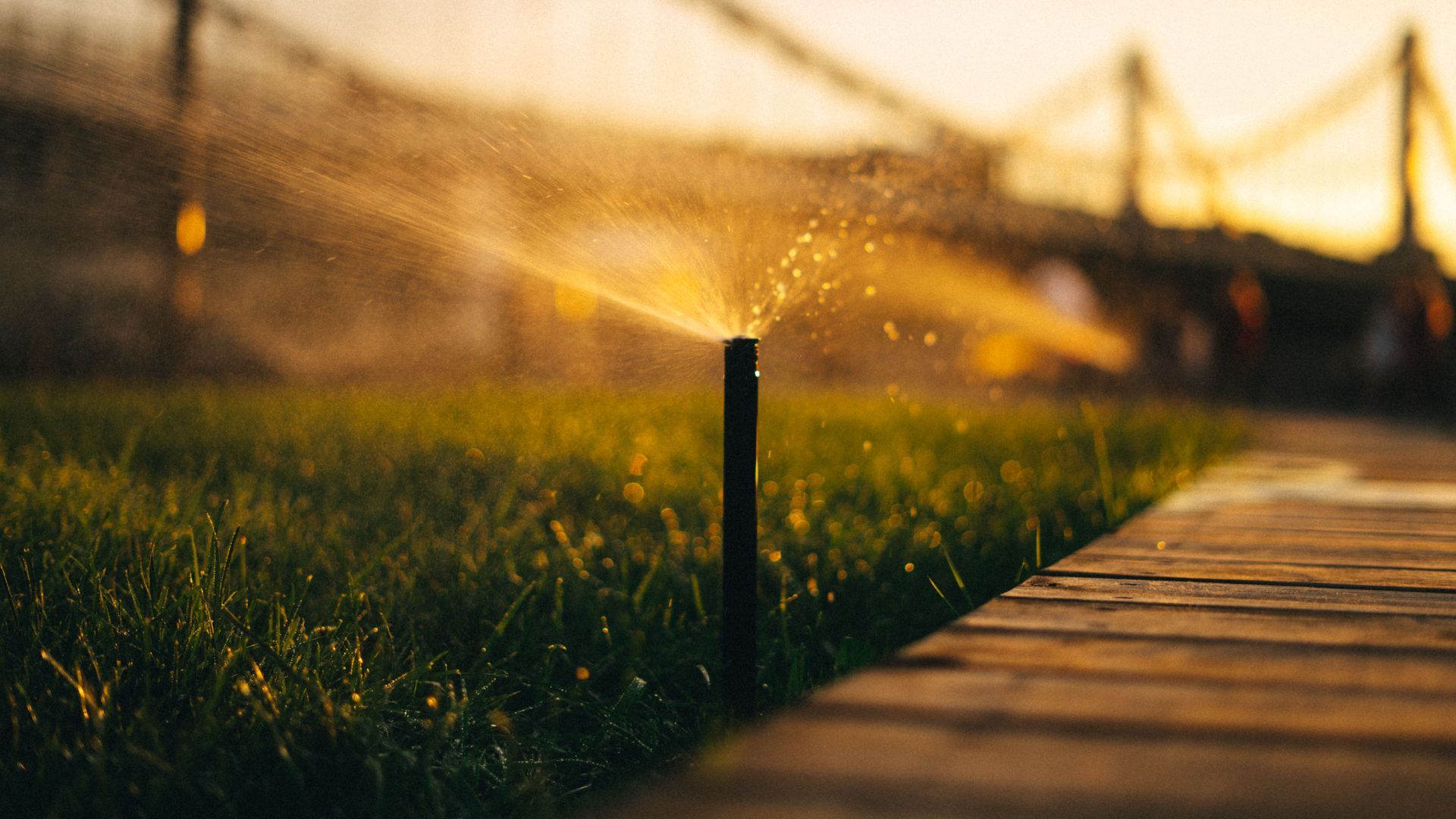
Sprinkler lines are shallow. Where no local code sets a depth, Hunter's installation guide puts lateral lines 6 to 8 inches down and main lines 10 to 12, while the City's residential building code works to a frost line of 42 inches. Pipe that shallow is well within reach of frost, which is why systems here are emptied every fall. Hunter warns that water left in the system can freeze, expand and crack PVC pipe, and that water freezing in the backflow assembly damages its internal parts and could crack the brass body.
A blowout clears that water with compressed air. We shut off the irrigation supply, connect a compressor downstream of the backflow preventer and open one zone at a time, starting with the one farthest from the compressor. Each zone gets short cycles of about two minutes, repeated until it's dry and no longer, because compressed air moving through dry pipe creates heat that can damage it. Pressure stays low: Hunter sets the limit at 50 psi for polyethylene pipe and 80 psi for PVC, and Rain Bird's guide says not to exceed 50 psi. The backflow preventer is drained separately, since compressed air shouldn't be blown through it.
When to book. Hunter's advice is to blow the system out before the first freeze. At the McHenry weather station the median date of the first fall freeze is October 11, and in one year out of ten it comes before September 27, so a visit in late September or the first week of October is ahead of the freeze in most years. Under the Illinois Plumbing Code an outdoor backflow preventer has to be protected from freezing or removed at the end of the season, and we drain the device on the same visit.
Blowout Safety
Compressed air can injure. Hunter and Rain Bird both tell anyone blowing out a system to wear safety eye protection and to keep from standing over pipes, valves or sprinkler heads while the air is on. Both also say never to run the compressor unless at least one zone valve is open.
Rain Bird cautions that small shop compressors of about 2 horsepower may not be adequate for the job, and the University of Minnesota's turf program explains why: most home compressors can reach the pressure but can't deliver the same volume of air. Some systems are built with manual or automatic drain valves and can be emptied without air, but one designed for blowouts needs a compressor that's up to it.
Spring Start-Ups
Turning a system on too early or too fast can undo a careful winterization. Rain Bird's advice is to check with a shovel that the soil is frost-free 12 inches down before the water goes on, and to wait another week if it's still frozen. Locally the median last freeze of spring is May 1, and one spring in ten still brings a freeze after May 19, so above-ground parts such as the backflow preventer can still meet a freezing night after the system is running.
On the day, we open the main valve slowly so the pipes fill gradually and avoid the pressure surge known as water hammer. Each zone is then run in turn while we walk it, looking for heads that got buried over winter, cracked or worn parts and nozzles spraying the wrong way. The EPA recommends this check every spring to catch frost damage. The controller's programs get tested, and its backup battery is replaced if it has one.
Backflow Preventers and the Annual RPZ Test
Do you really need a backflow preventer on a sprinkler system? In Illinois, yes. The state plumbing code requires any lawn sprinkler system connected to a drinking-water supply to have a reduced pressure zone assembly, usually called an RPZ, which protects the drinking water from anything drawn back out of the sprinkler lines.
The same code requires the RPZ to be tested before it first goes into service and at least once a year after that, by a state-approved Cross-Connection Control Device Inspector. Illinois EPA rules add that the inspector must be authorized to do plumbing, that the inspection records go to your water supplier, and that each device carries a tag with the date of its most recent test. The City of McHenry's code follows the state plumbing code, and it lets the City shut off water to a property over a cross-connection violation, with a $500 fee to reconnect.
That makes the yearly test a certified inspector's job, booked separately from sprinkler service. At start-up we'll tell you if your RPZ is leaking, cracked or missing its test tag so you can get it seen to.
Licensed, Insured and Careful With Your Lawn
We're licensed and insured. Where a repair means digging, we keep the hole small and put the turf back, and the old parts leave with us. Estimates are free: call and we'll look at the system, tell you what has failed and price the repair before any work starts.
New Sprinkler System Installation
A new system starts with your water pressure and flow, because they decide how many heads one zone can run. From there the yard is divided into zones of matched heads: rotors for open areas about 25 feet across and larger, spray heads for smaller ones, and never both on one zone. Heads are spaced so that each one sprays as far as the heads next to it and across from it.
Illinois regulates this work. Irrigation contractors register with the Department of Public Health each year, a licensed plumber has to be responsible for each installation, inspect it and make the physical connection to the backflow device, and each new system is registered with the state. The City's permit fee schedule lists a residential lawn sprinkler system at $50 and backflow prevention installation at $50; the City can confirm what your address needs.
Trenching means a JULIE locate first. JULIE asks for notice at least 3 but not more than 10 days before any digging project, whatever its size or depth, with weekends and holidays left out of the 3-day count. JULIE's members mark only the lines they own, so private lines such as existing sprinkler pipe, yard lighting and septic lines have to be found separately. If the system is going in with a new lawn or beds, we plan it together with our landscape design and installation work so the pipe goes in before the sod.
Watering Rules and Schedules Around McHenry
Tap water here is groundwater. McHenry County says it depends on groundwater for 100% of its drinking water, public and private supplies alike, and that landscape irrigation accounts for almost half of residential water use in summer.
City of McHenry rule: properties on City water may use lawn sprinklers only on matching dates, all year round: even-numbered addresses on even calendar dates, odd-numbered addresses on odd dates, and nobody on July 31 or August 31. When a yellow condition is in effect, outdoor watering is limited to 6–9 a.m. and 6–9 p.m. on those days, and under red it's prohibited. Drip irrigation for beds and attended hand-held watering are exempt under normal (green) conditions.
Neighboring towns set their own rules. On Crystal Lake city water, lawn and landscape watering is allowed only from 5 to 8 a.m. and 6 to 9 p.m., and Lake in the Hills keeps an odd/even restriction in force all year. We program controllers to fit the rule for your address.
Within those limits, University of Illinois Extension puts a lawn's need at about 1 to 1.5 inches of water a week to stay green and growing, applied early in the day and in thorough, infrequent soakings. Soil decides how that's split. The McHenry soil series is well-drained silt over loamy glacial till, and other lots sit over thick sand and gravel. Hunter's guidance is longer, less frequent cycles on sandy soil, which absorbs water quickly, and shorter run times with more start times on clay, which absorbs it slowly. Extension adds that it's perfectly acceptable not to irrigate and let a lawn go dormant in summer, so how green to keep it is your call. Our lawn care page covers mowing, feeding and overseeding, and landscaping in McHenry lists everything else we do.
Typical Sprinkler Repair and Winterization Prices
These are typical prices for the Chicago area, published in 2025 and 2026 by cost guides and by Chicago-area contractors. Each range runs from the lowest to the highest typical figure we found, using the guides' Chicago pages where they have them. The number of zones and how hard the fault is to reach move the figure most, and our free estimate gives you the real one.
Service visits and repairs
- Fall blowout (winterization) $65–$170
- Spring start-up $40–$150
- Sprinkler head replaced, each $60–$150
- Zone valve repaired or replaced $70–$400
- Broken or leaking pipe repaired $125–$415
- Controller repaired or replaced $100–$525
- Typical repair bill $100–$500
- Annual RPZ test, by a certified inspector $50–$150
New systems
- New system, quarter-acre lot $1,900–$10,000
- New system, per zone $500–$2,000
System size: blowout and start-up prices are for typical home systems of up to about six zones; larger systems cost more. For a quarter-acre lot, cost guides put a new system at about $1,900 to $4,700, while the Chicago-area installers that publish prices start at $4,500 to $6,950 and run to $10,000.
Figures gathered in October 2026 from published cost guides and Chicago-area contractors' websites. Not a quote.
Sprinkler Repair FAQs
What homeowners ask us most about repairs, blowouts and backflow tests.
How much does sprinkler repair cost around McHenry?
Cost guides put most sprinkler repair bills between about $100 and $500, and the 2026 figure published for Chicago is about $160 to $500. Replacing a sprinkler head typically runs $60 to $150 and a zone valve $70 to $400. Your free estimate gives the real figure before any work starts.
When should I winterize my sprinkler system in northern Illinois?
Before the first freeze. At the local weather station the median first fall freeze is October 11, and one year in ten it comes before September 27, so late September to early October is the time to book.
How much does it cost to winterize a sprinkler system?
Chicago-area price guides and a local contractor put a blowout for a typical home system at about $65 to $170. Larger systems, from about seven zones up, cost more.
Can I winterize my sprinkler system without a compressor?
Only if it was built with manual or automatic drain valves. A system designed for blowouts needs compressed air, and Rain Bird cautions that small shop compressors may not be adequate for it.
Is the yearly backflow test really required?
Yes. Illinois requires the RPZ on a lawn sprinkler system to be tested at least annually by a state-approved Cross-Connection Control Device Inspector, with the records sent to your water supplier. Published prices for the test run about $50 to $150.
Does a plumber have to install a sprinkler system in Illinois?
Not necessarily every part of it. A registered irrigation contractor's crew can put the system in, but a licensed plumber has to be responsible for the installation, inspect it and make the connection to the backflow device.
Which days can I water my lawn in McHenry?
On City water, even-numbered addresses may use lawn sprinklers on even calendar dates and odd-numbered addresses on odd dates, all year, with no sprinkling on July 31 or August 31. Tighter limits apply when a yellow or red condition is in effect.
Which areas do you cover?
Sprinkler work covers McHenry itself and Woodstock, Richmond, Wonder Lake, Ringwood, Johnsburg, Spring Grove, Prairie Grove, Lake in the Hills, Island Lake, Fox Lake and Crystal Lake.