

Landscape Design & Installation in McHenry, IL
Planting Beds, Shrubs, Sod, Mulch, Grading & Drainage
Landscaping Pros McHenry plans and installs new landscapes in McHenry, IL, for homeowners and commercial properties in town and the surrounding communities. We draw up planting plans, build new beds, plant shrubs, perennials and young trees, lay sod, spread mulch and set edging, and regrade yards where water sits after rain. The crews are licensed and insured, and nothing gets left behind: offcuts, pots and spoil all leave with us.

Contact Us
Design and Installation Services
- Site visit and planting plan: a walk round the yard, measurements, and a drawn layout with a plant list
- Planting beds: new beds cut, the soil prepared, edged and mulched
- Shrubs and young trees: foundation shrubs, screens and specimen trees set at the right depth
- Perennials and native plants: borders and prairie-style plantings that suit northern Illinois
- Sod installation: new lawns and bare patches laid on a firmed, graded bed
- Mulch and edging: shredded hardwood at the right depth, with stone, brick or steel borders
- Grading: reshaping ground so water drains away from the house
- Rain gardens and drainage: shallow planted basins and drain lines for soggy spots
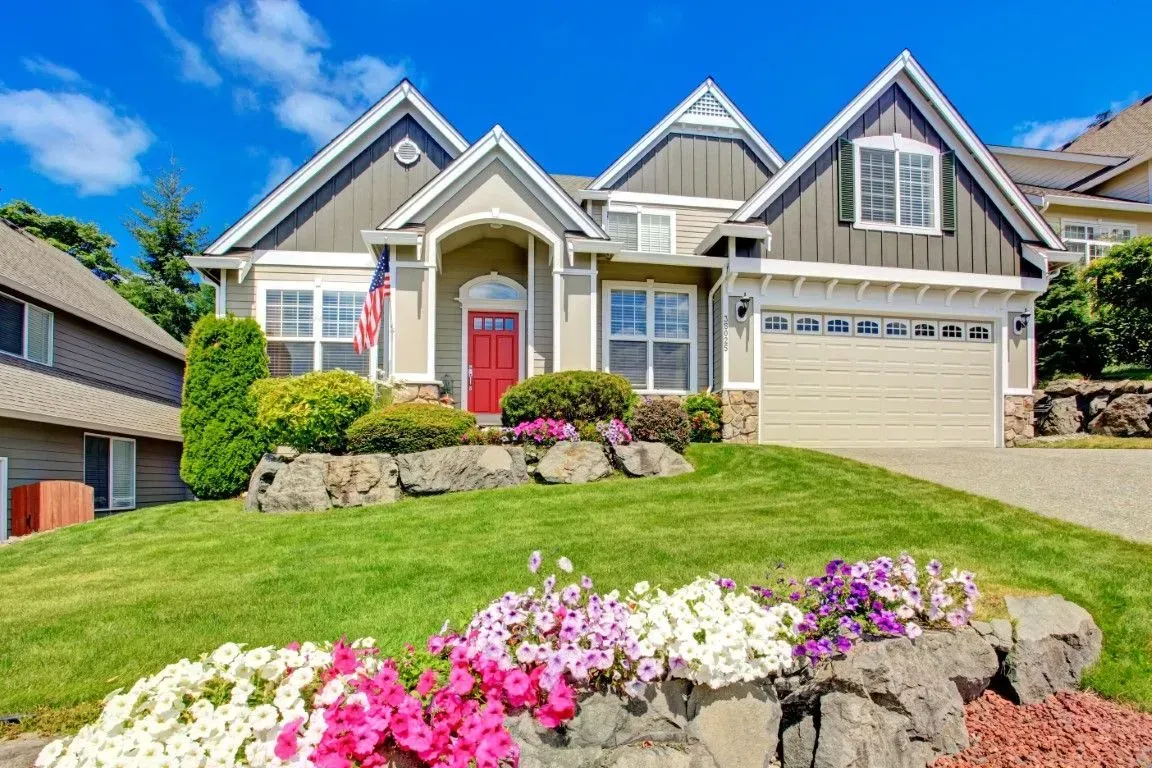
- Front yard makeovers: new foundation planting, walkway beds and a lawn that frames the house
How a Landscape Design Comes Together
Every plan starts in your yard. We look at where the sun falls through the day, which corners stay wet after a storm, how the ground slopes toward or away from the house, and what's already worth keeping. We ask how you use the space: a play lawn for the kids, privacy from the road, somewhere to sit in the evening, or beds that look after themselves.
From there we draw a layout showing beds, lawn, paths and any patio area, with a plant list matched to the light and soil in each spot. You get a written estimate for the installation, and we adjust the plan until it fits your budget. Once you approve it, we book the work, call in the utility locate and install in a logical order: grading and drainage first, then beds and planting, then sod and mulch last.
Patios, walls and walkways often belong in the same plan. Where they do, we design them together and build them through our hardscaping and patios service, so the paving and the planting line up.
Planting for Zone 5b and Local Soils
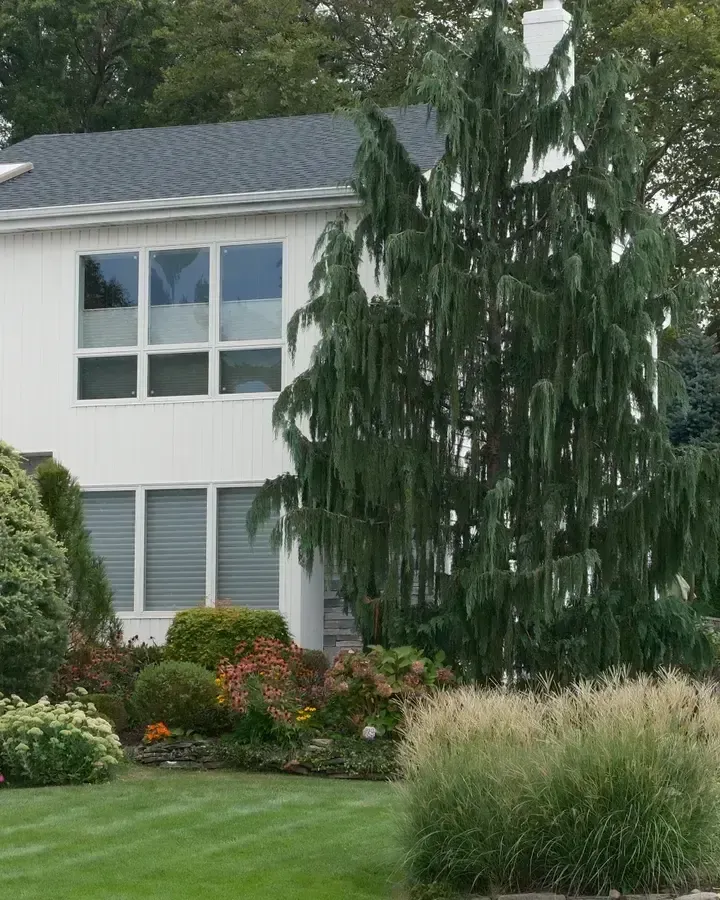
USDA's 2023 hardiness map, built on 1991–2020 weather data, puts McHenry's 60050 ZIP code in zone 5b, where the average annual extreme minimum temperature, the average of each winter's coldest night, is −15 to −10°F. We choose shrubs, perennials and trees rated for that cold, and we're careful with borderline plants in exposed spots, since hardiness zones are averages and a hard winter or a cold, exposed spot can still catch tender plants.
Soils change across a few streets here. The McHenry soil series, whose type location is about a mile east of Wonder Lake, is very deep, well-drained silt over loamy glacial till. Elsewhere you'll find coarse outwash sand and gravel, and peat in old lake basins and low, flat floodplains. We dig test holes before choosing plants, because a bed that suits a dry gravel bank will struggle in a wet low spot.
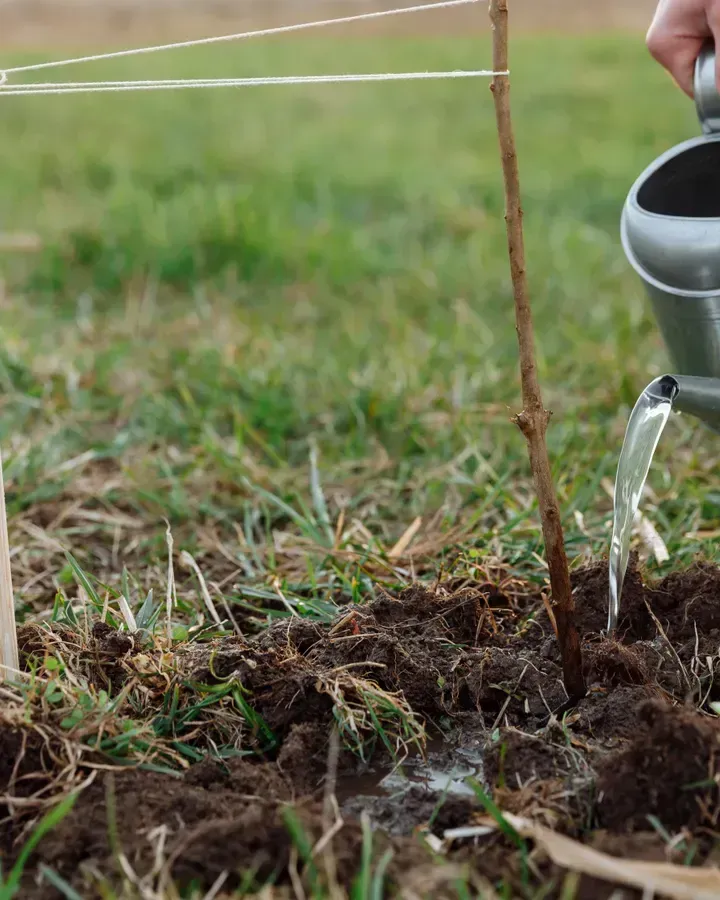
University of Illinois Extension's planting advice shapes how we set each plant. Trees go in with the trunk flare at the soil surface, in a hole two to three times as wide as the root ball and no deeper. We backfill with the soil that came out of the hole rather than a rich mix, so roots grow outward, and in heavy clay or compacted ground we set plants a few inches high for drainage and dig the hole three to four times as wide.
Native Plants and Prairie Gardens
McHenry County's Division of Water Resources encourages native plants because they're adapted to the local climate and generally need less water than lawn grass, little or no fertilizer and fewer pesticides. Extension recommends prairie species such as pale purple coneflower, butterfly milkweed, wild bergamot, little bluestem and prairie dropseed for sunny, well-drained beds, and notes that prairie dropseed tolerates a wide range of soils, clay included. Little bluestem roots can reach 5 to 8 feet down, and prairie plants like it help reduce soil erosion.
We mix natives with garden plants or plan whole prairie-style borders, whichever suits the house. The Land Conservancy of McHenry County runs a Conservation@Home program that recognizes yards with native plantings, if you'd like your garden to count toward it.
Plants Illinois has banned: under the Illinois Exotic Weed Act it's illegal to buy, sell, distribute or plant listed invasive species without a permit. The list includes common and glossy buckthorn, several bush honeysuckles, autumn olive, multiflora rose, tree of heaven and Amur corktree, and Callery pear (including Bradford pear) joins it on January 1, 2028. We don't plant anything on the list.
Front Yards and Curb Appeal
A front yard is the part of the landscape everyone sees, so we keep it tidy and in proportion to the house. Typical work includes clearing out tired foundation shrubs, setting new beds along the walk and porch, and finishing with fresh sod and a clean edge. Evergreens give winter structure when the perennials have died back.
Corners and driveways come with a rule. The City of McHenry's sight-triangle standard keeps hedges, opaque plantings and walls no taller than 2½ feet in a triangle measured 30 feet along each street at a corner, or 10 feet where a driveway meets the street, and branches overhanging it must be more than 8 feet above the pavement. The City's yard table allows vegetable gardens in rear, side and court yards but doesn't list them for front yards, so edible beds usually go to the side or back.
Deer browse many yards near open land and the conservation areas. Extension's advice is that "deer resistant" only means a plant isn't their first choice: yews, hostas and daylilies are favorites, while plants like peonies, lilacs, Russian sage and spruce are eaten less often. Where deer are regular visitors, we plan around that.
Sod Installation
Sod gives you a finished lawn the day it's laid. According to Extension, freshly cut sod can be laid at any point while the grass is actively growing. We remove the old turf or weeds, grade the soil, and firm the bed until it won't hold a footprint, then lay the rolls tight with staggered seams.
The first watering soaks through the sod into the soil beneath it. After that, the soil underneath needs to stay moist without turning soggy, which you can check by lifting a corner. Ideally, new sod starts to root within about two weeks, and a gentle tug on a roll tells you when. For mowing, feeding and aeration once it has rooted, our lawn care crews can take over.
Mulch, Planting Beds and Edging
A new bed starts with removing turf and weeds, loosening the soil and shaping a clean outline. Mulch then keeps moisture in and weeds down. Extension recommends 2 to 3 inches around trees and shrubs, kept at least 4 inches back from trunks, and Morton Arboretum suggests about 2 inches in perennial beds. Mulch heaped against a trunk in a "volcano" holds moisture against the bark until it rots, and it can lead to roots wrapping around the trunk and strangling it, so we never pile it that way.
We use organic mulch such as shredded hardwood; Extension notes that rock mulch doesn't give the same benefits. A firm edge in steel, stone or brick keeps the lawn from creeping in and the mulch from washing onto paths. For pruning and care of established trees and shrubs, see our tree and shrub care service.
Licensed and Insured, With Clean-Up After Every Job
Every installation is carried out by licensed and insured crews. Before we pack up, beds are raked level, paths and drives are swept, and the empty pots, sod offcuts and spoil go on our truck. A free estimate starts with a walk round your yard together, and you'll have a price for both the plan and the planting before any date is booked.
Grading and Yard Drainage
Water that runs toward the house or pools in the lawn after a storm is usually a grading problem. We reshape the ground so it falls away from the foundation, add drain lines where a low spot can't be graded out, and redirect downspouts into beds or rain gardens. McHenry's city code bars sending stormwater, roof runoff or sump discharge onto a neighbor's property in a way that causes a nuisance, or onto the street or sidewalk, so it has to be directed into your own yard or toward the subdivision's engineered drainage. Where a yard needs a buried French drain, we design that too.
Rain gardens work well on many local lots. McHenry County's water resources guide places them at least 10 feet from the house, in a natural low spot away from septic fields and utilities, and sizes them by soil: clay soils need a much larger garden than sandy ones. Extension adds that water should soak away within 24 hours, which a simple percolation test confirms before we dig.
Bigger jobs can need a permit. McHenry County's stormwater ordinance, which the City and most nearby towns administer as certified communities, asks for a permit in several cases, including any work in a wetland or flood hazard area and projects that hydrologically disturb at least 5,000 square feet. The City's floodplain code counts grading and filling as development, and work in the Fox River floodway may also need a state IDNR permit, so grading on riverside lots gets checked first.
Call JULIE Before Planting
Planting counts as digging. Illinois law requires a JULIE locate before any excavation, and JULIE lists trees, shrubs, gardens and landscaping among the projects that need one. Call 811 at least 3 days before you dig (weekends and holidays don't count toward the 3) and no more than 10 days ahead, then wait for the marks.
Buried utility lines can run under beds and lawns, so we don't break ground until the locate is done, and we check for private lines such as irrigation separately.
When to Plant Around McHenry
The local growing season is shorter than many plant tags assume. NOAA's 1991–2020 normals for the McHenry lock and dam station put the median last spring freeze around May 1, though in about one year in ten a freeze still arrives after May 19, and the median first fall freeze around October 11. That leaves a median growing season of about 162 days, with close to 37 inches of precipitation a year.
Spring and early fall are the best planting windows. Extension advises planting perennials about six weeks before the first fall frost, and putting slow-rooting trees such as oaks, red maples, birches and magnolias in during spring. Fall-planted trees keep growing roots until the ground freezes solid. Sod can go down whenever the grass is growing. Many homeowners book their design over winter so planting can start as soon as the ground is workable.
New plants need help for the first couple of seasons. Extension recommends watering a new tree at least once a week, skipping a week when an inch of rain falls, for up to three years, and the County's guide says to expect about two years of watering and care for new plantings. We leave written watering instructions with every installation. Our landscaping in McHenry page covers lawns, patios and the rest of what we do.
Typical Landscape Design & Installation Prices
The ranges below come from current published cost guides, Chicago-area ones first and national ones where no local figure exists. Size, plant sizes, soil and how much grading the yard needs move the price most. We price your own plan and installation at the free site visit.
Per project
- Simple landscape plan $300–$1,500
- Full landscape design plan $700–$7,500
- Front yard landscaping $1,700–$6,000
- New planting bed $800–$3,200
- Sod, 1,000 sq ft installed $700–$3,250
- Yard grading $1,000–$3,500
- French drain, about 100 ft $1,000–$5,000
Per unit, installed
- Landscape installation, per sq ft $4.50–$15
- Planting bed, per sq ft $4.50–$20
- Sod, per sq ft $1–$2.75
- Rain garden, per sq ft $10–$20
- Edging, per linear ft $3.50–$10
- French drain, per linear ft $10–$50
Shrubs: most cost about $25 to $85 each to plant, and large ones up to about $230. The top of the sod range is for replacing an existing lawn.
Ranges drawn from Chicago-area and national cost guides in October 2026. Not a quote.
Landscape Design FAQs
Common questions before a new landscape goes in.
How much does landscape design cost around McHenry?
Published guides price a simple plan for a small project at about $300 to $1,500, and a full residential design at roughly $700 to $7,500. Installation is priced separately: a front yard typically runs about $1,700 to $6,000. Your free estimate gives the real figure.
Is it worth paying for a landscape plan?
For anything bigger than a single bed, usually yes. A plan puts plants where the light and soil suit them, sets the grading before anything is planted, and lets you install in stages over several seasons without the pieces clashing.
What grows well in McHenry's soil and climate?
Plants hardy to zone 5b or colder, chosen for each spot's light and drainage. Natives such as little bluestem, prairie dropseed, butterfly milkweed and pale purple coneflower suit sunny beds, and swamp white oak and bald cypress are rated tolerant of poor drainage.
When is the best time to plant in northern Illinois?
Spring and early fall. Perennials go in about six weeks before the first fall frost, which comes around October 11 on average here, and slow-rooting trees like oaks and red maples do better planted in spring. Sod can be laid any time the grass is growing.
How do I water new sod?
Soak it right after it's laid so water reaches the soil underneath, then keep that soil moist but not soggy. Lift a corner to check. Ideally, it starts rooting within about two weeks, and we leave watering instructions with every job.
Can you fix a yard where water sits after rain?
Yes. We regrade so the ground falls away from the house, redirect downspouts, and add rain gardens or drain lines where low spots can't be graded out. Work near the Fox River or in a flood hazard area is checked for permits first.
Are any plants banned in Illinois?
Yes. The Illinois Exotic Weed Act makes it illegal to buy, sell, distribute or plant listed invasives without a permit, such as common buckthorn, bush honeysuckles and autumn olive, and Callery pear is added from January 1, 2028. We plant nothing on the list.
Which areas do you serve?
We plan and plant across McHenry, plus Wonder Lake, Johnsburg, Crystal Lake, Woodstock, Lake in the Hills, Prairie Grove, Ringwood, Spring Grove, Richmond, Fox Lake and Island Lake.